Commander of D Company, 2nd Battalion, Oxfordshire and Buckinghamshire Light Infantry
Remembering Major John Howard at Pegasus Bridge
British
A personal reflection on the memorial to Major John Howard, the British officer who led the glider assault on Pegasus Bridge in the opening minutes of D-Day. The article looks at his role in Operation Deadstick, the bravery of his men, and why the memorial remains such a powerful place of remembrance.
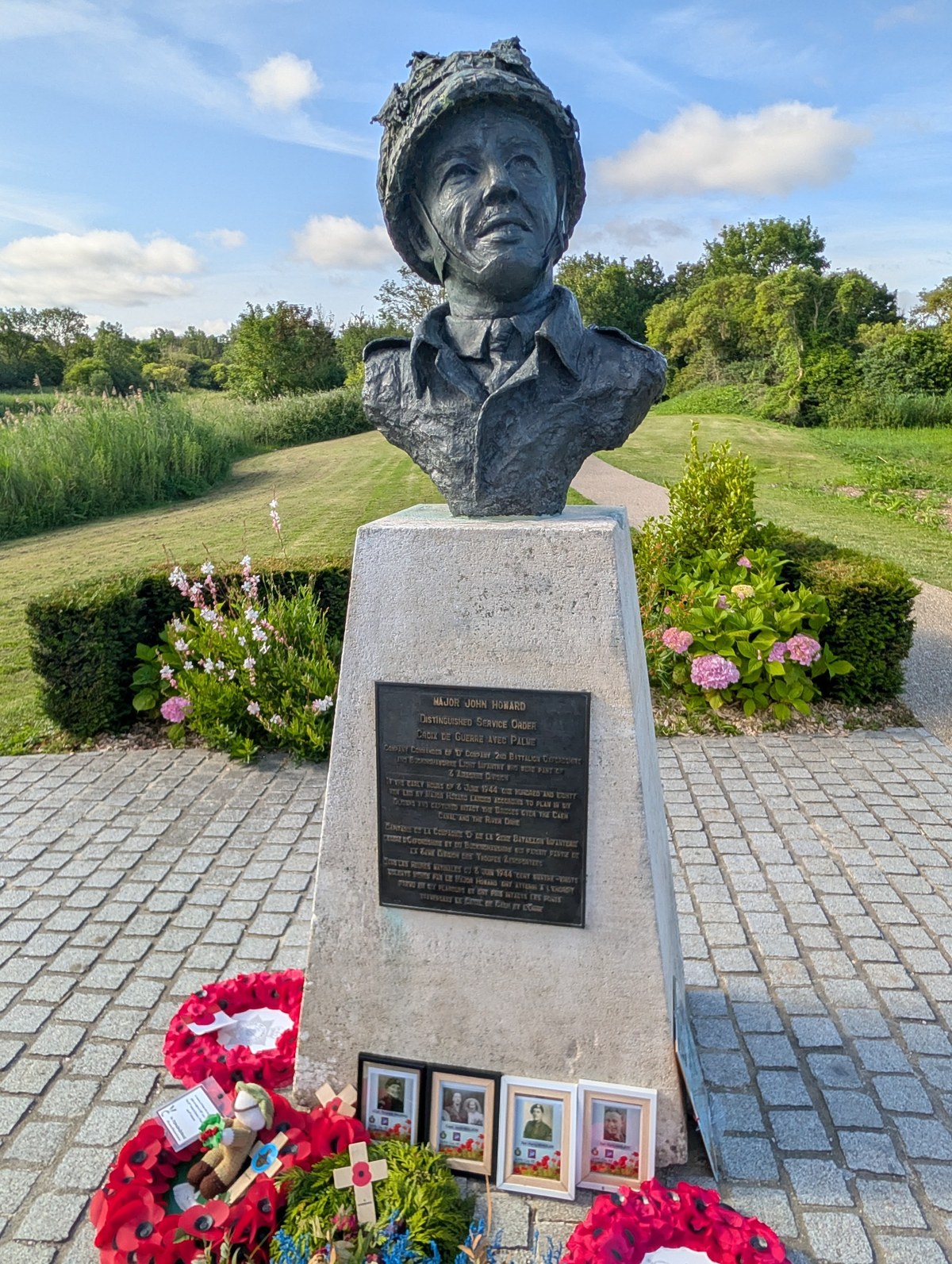
This photograph was taken one week after the most recent D-Day memorial commemorations (2026), at the memorial to Major John Howard near Pegasus Bridge in Normandy. Even though the main commemorations had passed, the memorial was still surrounded by flowers, poppies, wreaths, photographs and small personal tributes.
That was one of the things that really stood out to me. It showed that this is not just a story from a history book. People are still coming here, still leaving tributes, and still taking the time to remember Major Howard and the men who landed here in the opening minutes of 6 June 1944.
Major John Howard was the British officer who led the daring glider assault on Pegasus Bridge. He commanded D Company of the 2nd Battalion, Oxfordshire and Buckinghamshire Light Infantry, and their mission was one of the most important actions of the early hours of D-Day. They had to land silently by glider, capture the bridges over the Caen Canal and the River Orne, and hold them until reinforcements could arrive from the beaches.
It is hard to stand there and not think about what those men were asked to do. They were flying in at night, in wooden Horsa gliders, aiming to land as close as possible to the bridges without warning the German defenders. Their job was not only to take the bridges, but to take them intact. If the bridges were destroyed, or if German forces were able to use them for a counterattack, the eastern side of the Allied landings could have been in serious danger.
Major Reginald John Howard was born in London on 8 December 1912. Before the Second World War, he served in the British Army and later joined the Oxford City Police. When war broke out, he returned to military service and rose through the ranks, eventually becoming a major and taking command of D Company.
The operation he is remembered for was Operation Deadstick. Just after midnight on 6 June 1944, Howard and his men flew from England towards Normandy. The force was made up mainly of men from D Company, along with attached Royal Engineers and glider pilots. Their target was the bridges over the Caen Canal and River Orne, which had to be captured before the Germans could destroy them.
The assault was a remarkable success. The gliders landed incredibly close to their targets, and Howard’s men moved quickly to capture the bridges. The fighting was intense and there were casualties, including Lieutenant Den Brotheridge, who is often regarded as the first Allied soldier killed by enemy fire on D-Day.
After the bridges were taken, Howard and his men had to hold them. That was just as important as the assault itself. They faced German counterattacks and had to keep control of the bridges until reinforcements arrived. Later, British airborne troops and commandos moving inland from Sword Beach reached the area, and the success of the mission helped protect the eastern flank of the Allied landings.
For his leadership and bravery, Major John Howard was awarded the Distinguished Service Order. He continued to serve during the Normandy campaign, but later suffered serious injuries in a vehicle accident and took no further part in the war. After leaving the Army, he became a respected speaker and writer on the Pegasus Bridge operation. He died on 5 May 1999, aged 86.
Standing at his memorial so soon after the D-Day commemorations felt very powerful. The flowers and tributes left behind made it clear that people still feel connected to this story. It is not just about military planning or tactics. It is about leadership, courage, and men being asked to do something incredibly dangerous in the dark, knowing how much depended on them.
Major John Howard and the men of Pegasus Bridge helped begin the liberation of Normandy. Their actions in the first minutes of D-Day became one of the most famous stories of the whole operation, and standing there at the memorial, it is easy to understand why.
The place is quiet now, but it still carries the weight of what happened there. The memorial, the wreaths, the photographs and the poppies all say the same thing in their own way: Major Howard and his men are still remembered, and their story still matters.