Battlefield Guide
Pegasus Bridge Today: Standing Between the Glider Landing Site and Café Gondrée
A personal reflection on visiting the modern replacement Pegasus Bridge at Bénouville in Normandy. Although the original bridge is now preserved at the Memorial Pegasus Museum, the replacement bridge stands in the same historic area, between the glider landing sites and Café Gondrée, making it a powerful place to understand the opening moments of D-Day.
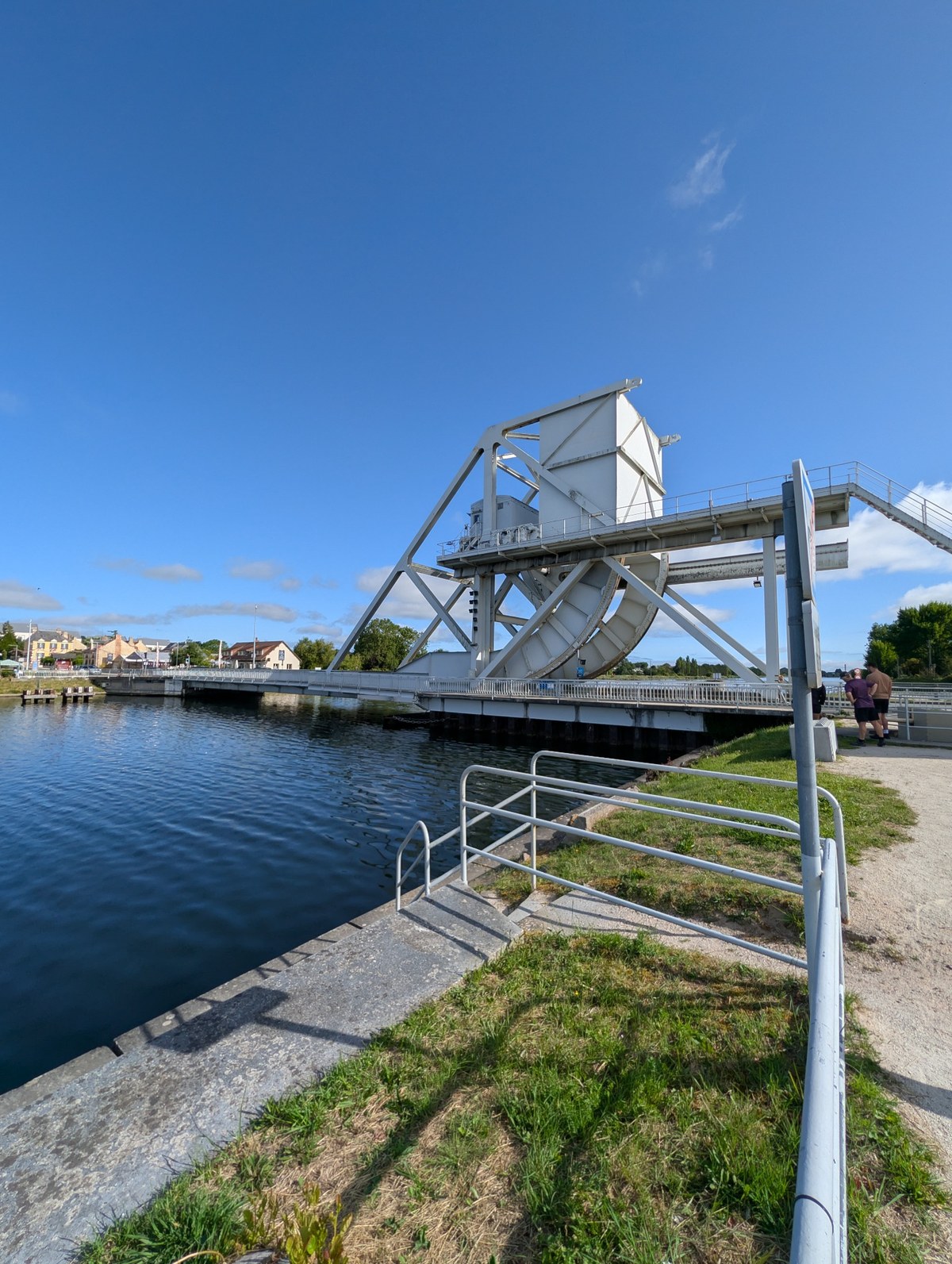
This photograph shows the modern replacement Pegasus Bridge at Bénouville in Normandy. It is important to say straight away that this is not the original bridge captured on D-Day. The original bridge is now preserved in the grounds of the Memorial Pegasus Museum, where visitors can see it up close. This bridge replaced it, but it still stands in the same historic area, right between the places that make this part of Normandy so powerful.
Standing here, you are between the glider landing sites and Café Gondrée, the first house liberated on D-Day. That is what makes the location so special. Even though the bridge itself is not the original wartime structure, the ground around it is full of history. You can look towards the canal, think about the gliders coming in through the darkness, and then look back towards Café Gondrée, where liberation reached an ordinary family home in the early hours of 6 June 1944.
The bridge over the Caen Canal was one of the key objectives of Operation Deadstick. Major John Howard and the men of D Company, 2nd Battalion, Oxfordshire and Buckinghamshire Light Infantry, were ordered to land by Horsa glider, capture the bridge intact, and hold it until reinforcements arrived. It was a dangerous mission with very little room for error, but it became one of the most famous successes of D-Day.
What struck me about standing near the replacement bridge is how close everything feels. The glider landing area, the bridge and Café Gondrée are all within a short walk of each other. When you read about the operation, it can sound like a large military action spread across a map. But when you stand there in person, it becomes much more human and immediate. You realise how close the men landed to their target, how quickly they had to move, and how important those first few minutes were.
The modern bridge still helps you understand the geography of the operation. You can see the canal, the road, the crossing point and the surrounding area. The original bridge may be in the museum now, but this is still the place where the story happened. The bridge marks the crossing that had to be captured and held to protect the eastern flank of the Allied landings.
For me, this was one of those places where the past and present sit side by side. Traffic still passes over the bridge. Visitors walk along the canal. People stop for coffee at Café Gondrée. Life has carried on, as it should. But beneath that normal everyday scene is the memory of the men who came in by glider before dawn and changed the course of the day before most people even knew the invasion had begun.
It is easy to focus only on the original bridge in the museum, and that is definitely worth seeing. But the replacement bridge has its own importance because it keeps you connected to the actual landscape. It lets you stand in the space between the glider landing zones and the first liberated house, and that gives the whole story a sense of place.
Looking at the bridge today, peaceful under the Normandy sky, it is hard to imagine the noise, fear and confusion of that night. But that is why visiting these places matters. They help you move beyond dates and facts. They help you picture real men landing in darkness, rushing towards the bridge, and holding it against counterattacks until help arrived.
The replacement Pegasus Bridge may not be the original wartime structure, but it still stands at the heart of one of the most important D-Day stories. For anyone visiting this area, it is worth taking the time to stop here, walk around, look towards the glider landing sites, and then across to Café Gondrée. Only then do you really begin to understand how close and intense those opening moments of D-Day were.