Article
The Original Pegasus Bridge: Standing Beside a Piece of D-Day History
A personal reflection on seeing the original Pegasus Bridge inside the grounds of the Memorial Pegasus Museum in Normandy. The article looks at the bridge’s role on D-Day, Major John Howard’s glider assault, and what it feels like to stand beside the actual bridge captured in the opening minutes of 6 June 1944.
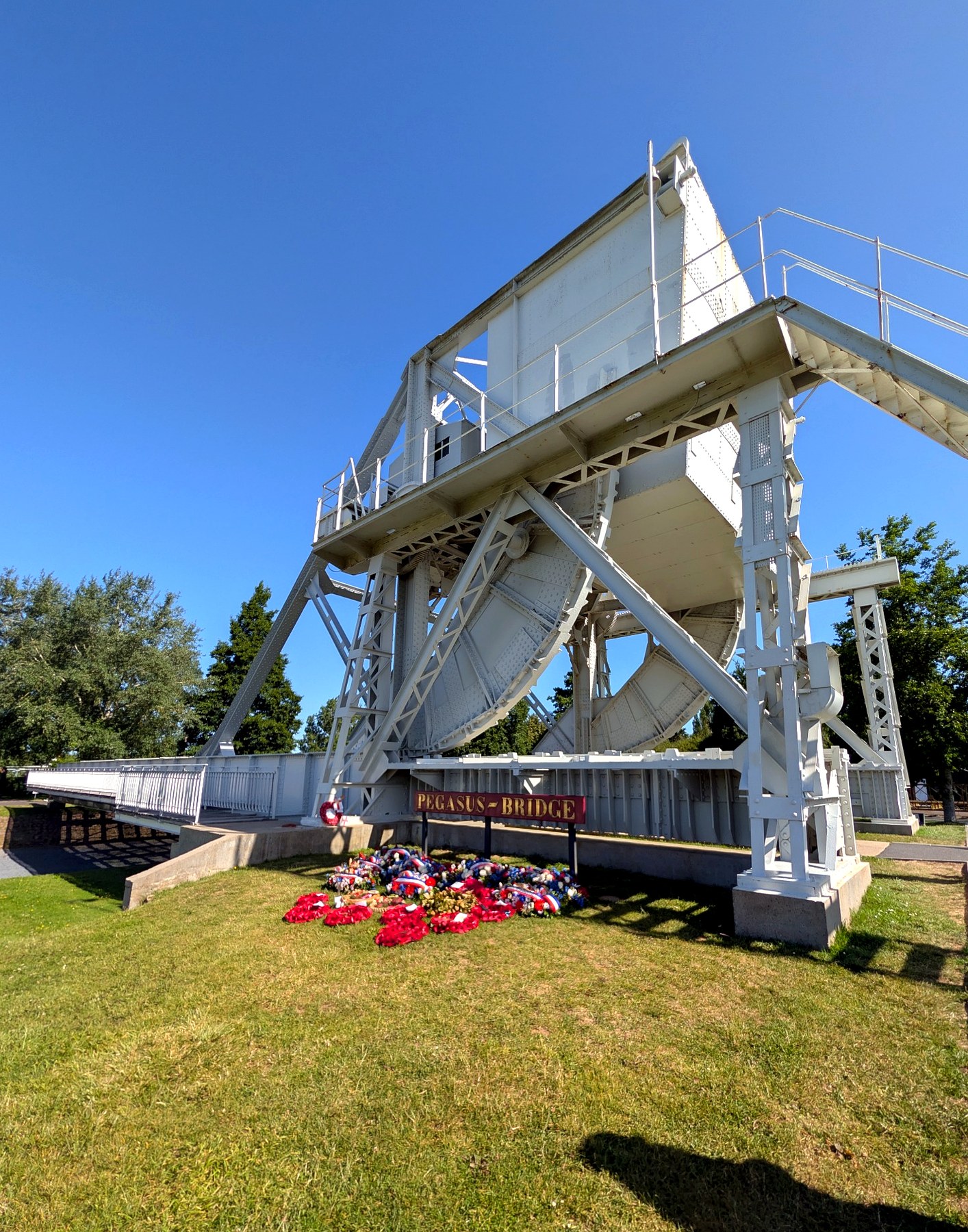
This is the original Pegasus Bridge, now preserved in the grounds of the Memorial Pegasus Museum in Normandy. I took this photograph myself during the trip, and it was one of those places that made the history feel very real.
The bridge in the photograph is not just a replica or a display piece made to represent what happened. This is the original bridge that stood over the Caen Canal at Bénouville on D-Day. It was replaced by a newer bridge in 1994, but the original was saved and moved to the museum, where visitors can now stand beside it and walk around it. Seeing it there makes you realise that you are looking at one of the most important objects connected to the opening moments of 6 June 1944.
Before D-Day, the bridge was known as the Bénouville Bridge. It later became famous as Pegasus Bridge, named after the winged horse emblem of the British airborne forces. Its capture was part of Operation Deadstick, the glider assault led by Major John Howard and the men of D Company, 2nd Battalion, Oxfordshire and Buckinghamshire Light Infantry.
Their mission was simple to describe but incredibly dangerous to carry out. They had to fly from England in Horsa gliders, land in darkness as close to the bridges as possible, capture the bridge over the Caen Canal and the nearby bridge over the River Orne, and hold them until reinforcements arrived. The bridges had to be taken intact, because if the Germans destroyed them or used them to counterattack, the eastern flank of the D-Day landings could have been in serious danger.
Standing in front of the original bridge, it is hard not to think about those gliders coming in through the dark. The men inside would have known how important the mission was, but they were still landing in enemy-held territory, in wooden aircraft, with very little room for error. The first glider landed incredibly close to the bridge, and within minutes Major Howard’s men were fighting to take control of it.
That is what makes this bridge so powerful to see. It is not just metal and rivets. It is the actual structure that those men fought over in the first minutes of D-Day. It was there when the gliders landed. It was there when the shooting started. It was there when Lieutenant Den Brotheridge was killed, often remembered as the first Allied soldier killed by enemy fire on D-Day. It was there when the bridge was captured and held against German counterattacks.
Today, the bridge sits peacefully in the museum grounds, with wreaths and tributes placed beneath the Pegasus Bridge sign. The grass is cut, the sky is open, and people walk around it quietly, taking photographs and reading the story. But even in that peaceful setting, it still carries the weight of what happened.
For me, seeing the original bridge was different from reading about it in a book or watching it in a documentary. When you are standing beside it, the scale becomes real. You can see how close the fighting must have been. You can picture men running across it, hearing orders shouted, not knowing what was coming next. The story suddenly feels less distant.
The Memorial Pegasus Museum does a very good job of keeping that history alive. The original bridge is one of the most important pieces in the museum grounds, and it gives visitors a direct link to the men of the 6th Airborne Division and the operation that helped secure the eastern side of the Normandy landings.
For anyone visiting Pegasus Bridge, I think seeing the original bridge at the museum is essential. The modern bridge nearby is important because it marks the place, but this original bridge carries the physical memory of the event. It is the bridge that was there on the night. It is the bridge Major Howard’s men captured. It is the bridge that became one of the most famous symbols of D-Day.
Standing there made me think about how strange history can feel sometimes. Something that once stood in the middle of danger, noise and violence now rests quietly in a museum garden. But that does not make it any less powerful. In some ways, the quiet makes you think about it even more.
The original Pegasus Bridge is more than a preserved structure. It is a witness to the first hours of D-Day, to the bravery of the men who landed by glider, and to the beginning of the liberation of Normandy. Seeing it in person was a real reminder that history is not only dates and names. Sometimes it is right there in front of you, in steel, stone, paint and old battle scars.
For me, this was one of the most important things to see at the Memorial Pegasus Museum. It brought the story of Major John Howard and his men closer, and it made the opening moments of D-Day feel less like something from the past and more like something that happened in a real place, to real men, on a bridge you can still stand beside today.