Article
Café Gondrée: Our First Coffee in France at the First House Liberated on D-Day
A personal reflection on visiting Café Gondrée beside Pegasus Bridge in Bénouville, remembered as the first house liberated on D-Day. The article looks at its connection to Major John Howard’s glider assault, the Gondrée family, and why this small café was the perfect first stop on our Normandy journey.
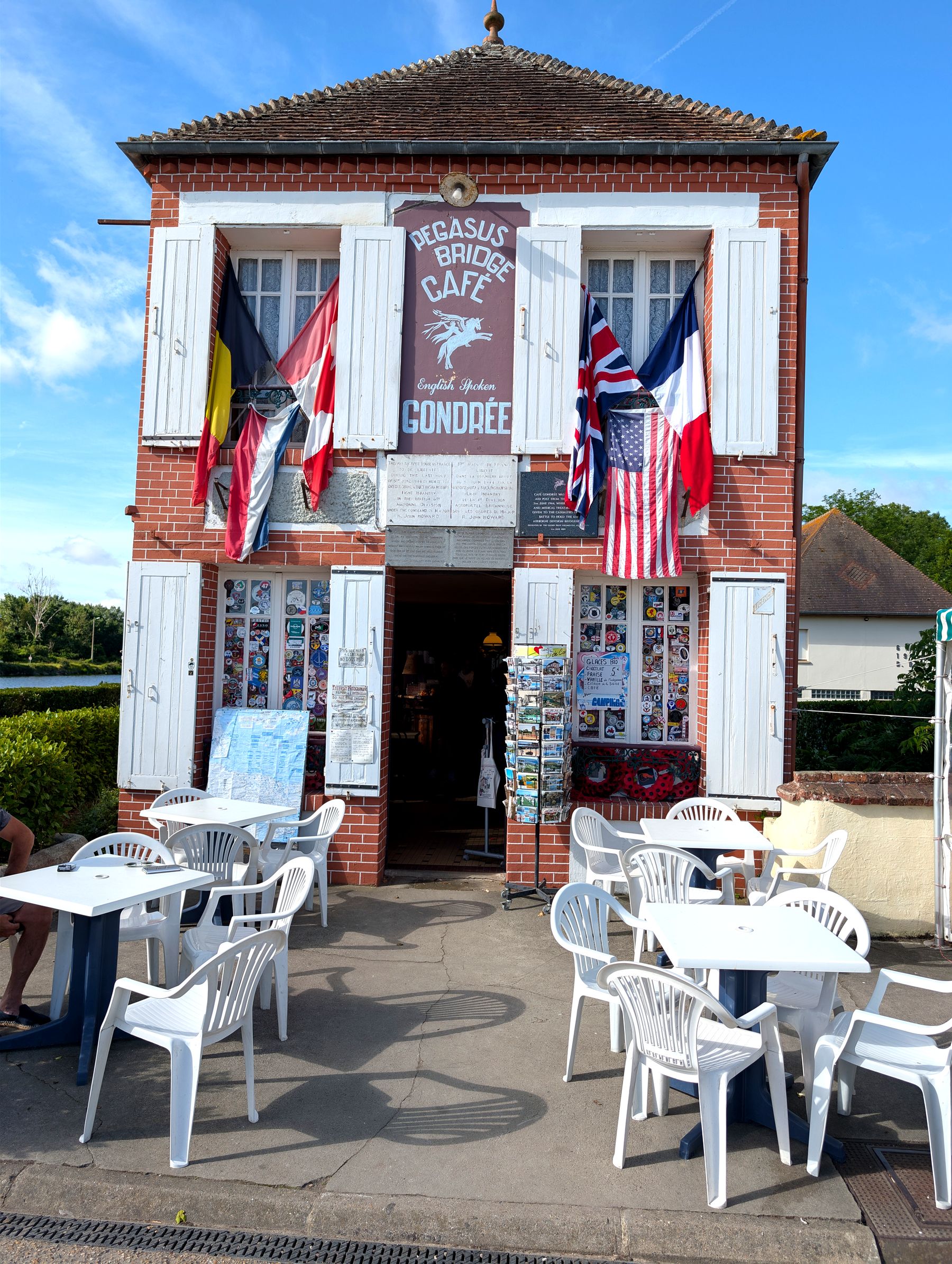
Café Gondrée was our first coffee stop in France, and looking back, I don’t think we could have chosen a better place to begin our Normandy trip. It sits right beside Pegasus Bridge in Bénouville and is known as the first house to be liberated on D-Day.
That sounds like a big title for such a small and ordinary-looking building, but that is exactly what makes it so powerful. So much of the history of D-Day is about huge military operations, beaches, ships, aircraft and thousands of men. Then you stand outside Café Gondrée and remember that liberation also came to individual homes and families.
In the early hours of 6 June 1944, Major John Howard’s men from the Oxfordshire and Buckinghamshire Light Infantry landed nearby in Horsa gliders. Their mission was to capture the bridges over the Caen Canal and the River Orne before German forces could destroy them or use them to counterattack the Allied landings. It was one of the most daring and successful airborne operations of the war.
The gliders landed incredibly close to their targets, and within minutes the men had captured Pegasus Bridge. As British troops secured the area, Café Gondrée and the family living there were liberated from German occupation. The whole operation happened so quickly that many German soldiers nearby had little idea what had taken place until it was too late.
One of the things I love about Café Gondrée is that it has remained connected to the Gondrée family ever since those historic events. It is not just a name on a map or a preserved building with a plaque on the wall. It still feels alive, and visitors from around the world continue to stop there because of what happened in that place.
Inside, the café feels more like a living museum than a normal café. The walls are filled with photographs, military memorabilia, veterans’ signatures, regimental badges and personal tributes. Everywhere you look, there is something connected to the story of Pegasus Bridge and the men who fought there.
Sitting outside with a coffee and looking towards Pegasus Bridge was one of those moments that will stay with me. After years of reading books, watching documentaries and planning the trip, we were finally there. It felt peaceful, but at the same time it was impossible not to imagine the gliders coming in through the darkness more than eighty years earlier.
That was what made it special. It was not just our first coffee in France. It felt like the proper beginning of the journey. We were sitting beside one of the most important places in the D-Day story, where the first moments of liberation began before most of Normandy even knew what was happening.
Some historic sites impress you because they are big or dramatic. Café Gondrée does the opposite. It is small, personal and human. It reminds you that history often happened in ordinary places, to ordinary people, caught up in events far bigger than themselves.
For us, there could not have been a better first stop. Café Gondrée gave the trip a sense of meaning straight away. It connected the history we had read about with a real place, a real family, and a quiet moment beside Pegasus Bridge.
Every great journey deserves a memorable first stop, and for us it was the first house to be liberated on D-Day.